
Penelope - Weaving independence
The series does not aim to document or represent Kuna culture. The encounter with Kuna women is the starting point of a symbolic and processual exploration, developed through the artist’s visual language.
The Penelope series recalls the queen of Ithaca who, constantly weaving the cloth during the day and unweaving it during the night, managed to stall and keep suitors at a distance from herself and Odysseus' throne, thus maintaining control over her own life.
Born, however, far away from Ithaca, the subject matter of these works takes its cue from some sketches Federica Aiello Pini took when she lived in Panama, encountering the women of the Kuna ethnic group, and seeing how, through their handicraft work handed down from generation to generation, they were becoming more and more knowledgeable and independent. They were passing on knowledge by improving their own lives, and including other women in the dream of emancipation: as in Panama and Colombia the Kuna and Emberá-Wounaan, so the ethnic groups of Mexico and those of South America, but also in the Maghreb camps and everywhere in the world, knowledge becomes the first step toward emancipation.
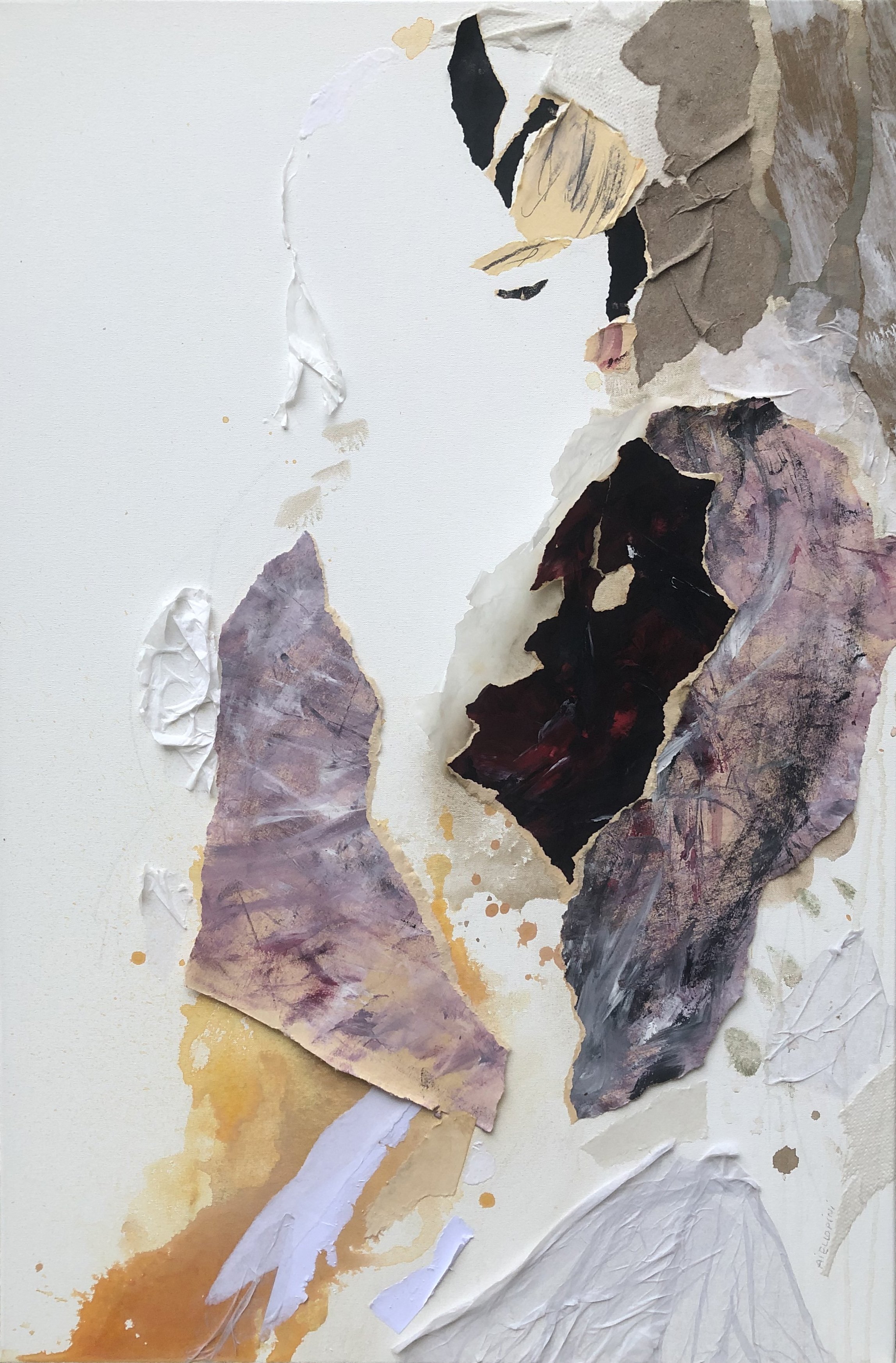
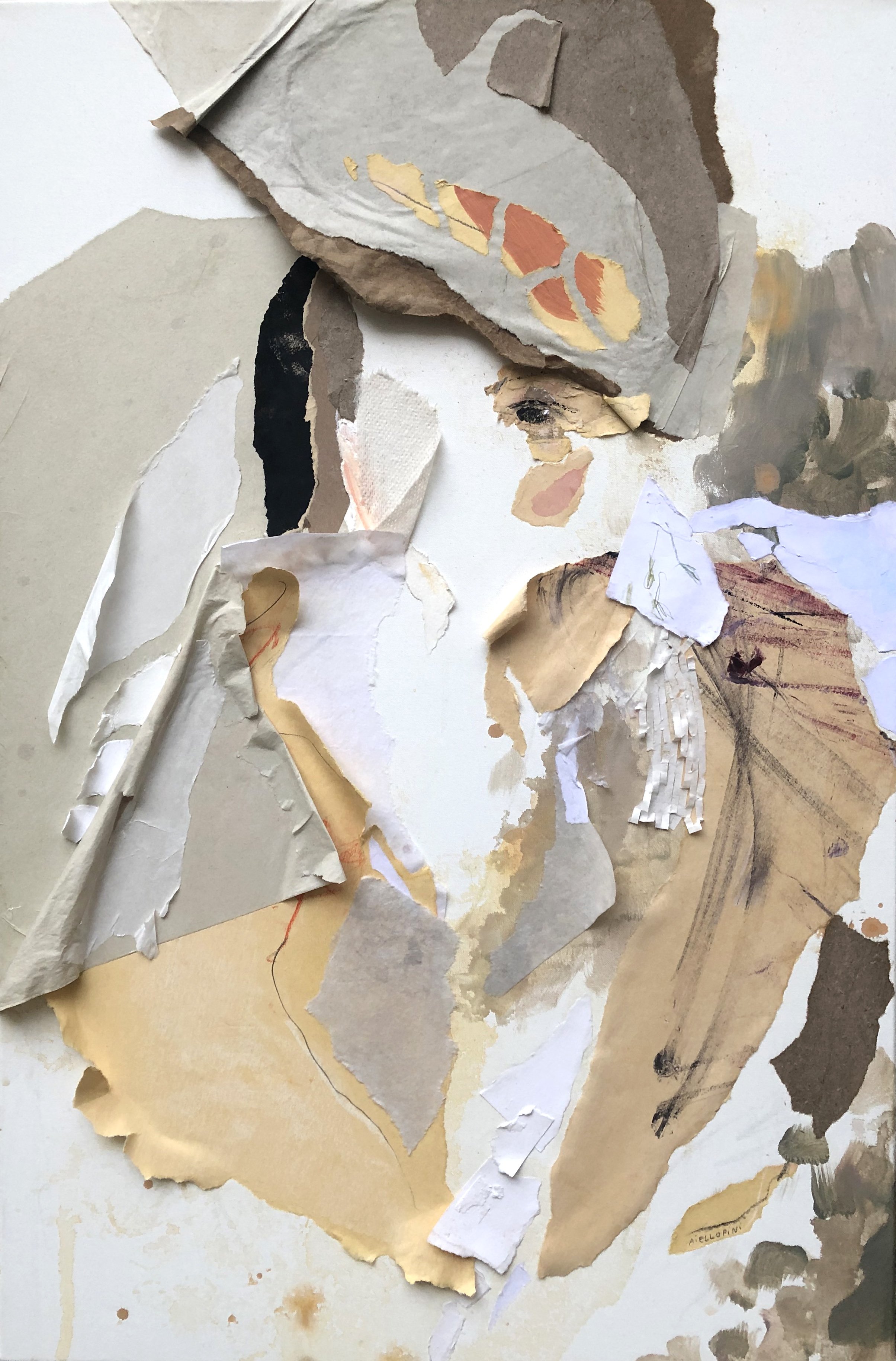
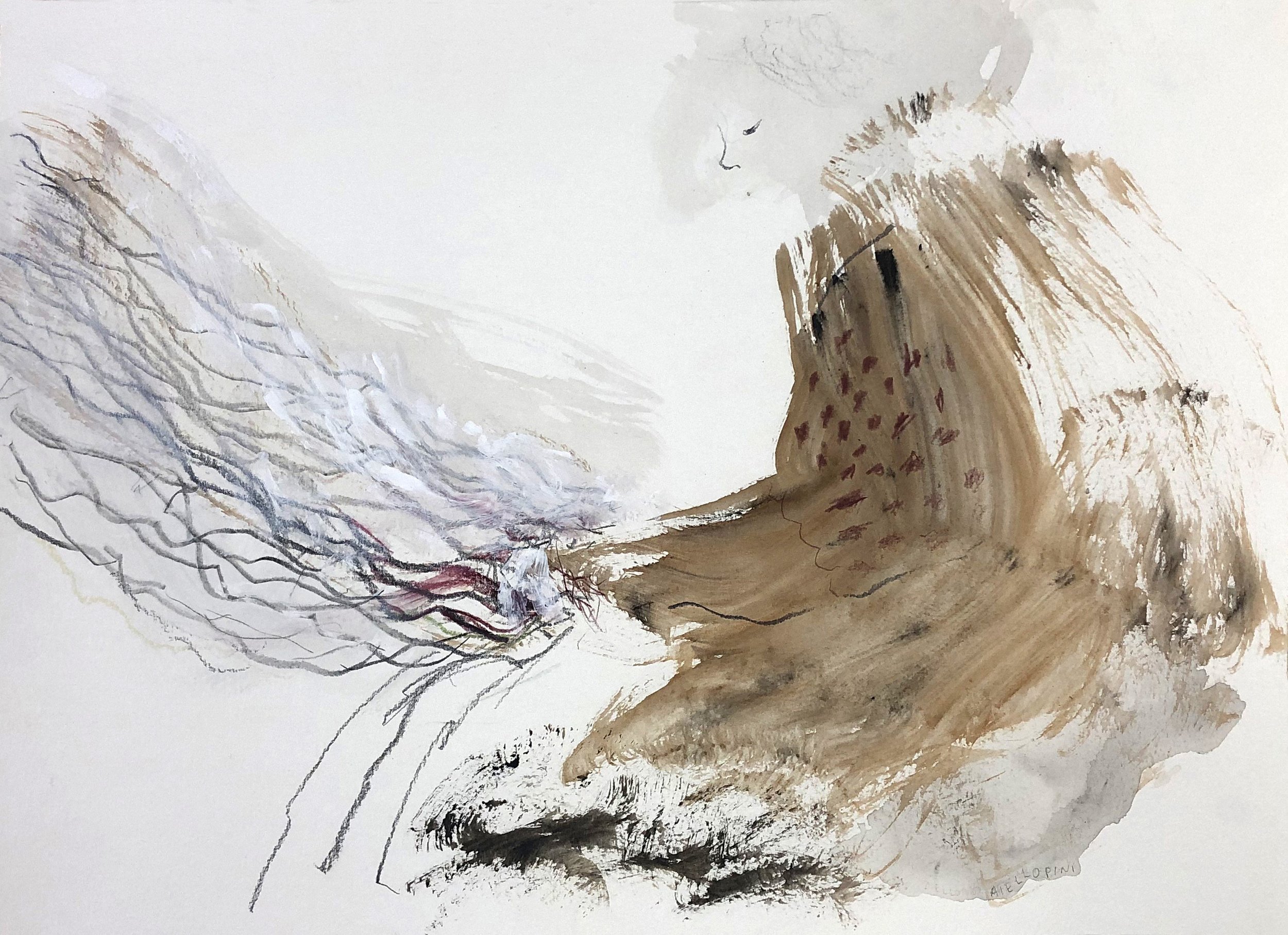
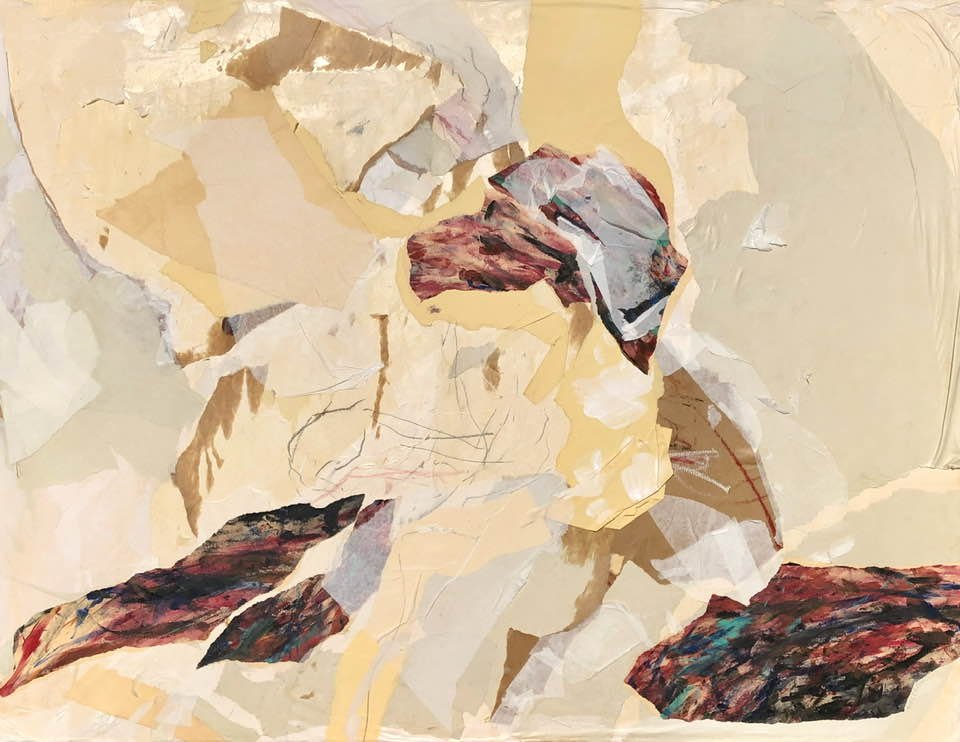
These works were executed with mixed media and collage made from pieces of Federica Aiello Pini’s previous works, torn and reassembled, recalling the mingling of the past with the present moment: figures of women clothed in their memories, which she depicted bordering on abstraction, enhancing fabrics and decorations (occasional references to the Kuna people's 'Mola' can be seen). Sometimes they were portrayed while working on textiles or baskets, patiently carrying on a tradition of craftsmanship that becomes life and, if handled consciously, a source of livelihood but also self-awareness and freedom.
There is also a second aspect to these stratifications: the collage pieces (rips from the past) that make up these bodies, the chair on which they rest and which supports them, and the fabric they create, are memory, knowledge and possibilities that shape the future. The same happens in the artistic creative process.
Federica Aiello Pini’s work does not aim to represent the Kuna, nor to document them visually. It rather arises from a prolonged and transformative encounter, in which Kuna culture acts as a symbolic and relational matrix. The figures that emerge are not portraits, but archetypal presences: bodies traversed by memory, gesture, and material. The act of drawing, painting, and collage becomes a space of emotional translation, not ethnographic restitution. Even when the marks approach sketches or visual annotations, the work does not claim documentary authenticity, but occupies the territory of lived experience, personal resonance, and informed imagination. In this sense, the practice moves between art and anthropology without conflating their roles: it does not speak about the Kuna, but from the place of transformation that the encounter with them has generated in the artist.
Italiano
La serie non ha lo scopo di documentare o rappresentare la cultura Kuna. L’incontro con le donne Kuna è il punto di partenza di un’indagine simbolica e processuale, sviluppata attraverso il linguaggio visivo dell’artista.
Il titolo della serie Penelope richiama la regina di Itaca che, con il suo continuo tessere la tela di giorno e disfarla durante la notte, riusciva a prendere tempo e tenere i pretendenti a distanza da sé e dal trono di Ulisse, restando così padrona della propria vita.
Nato però ben lontano da Itaca, il soggetto di questi lavori prende le mosse da alcuni schizzi che Federica Aiello Pini abbozzava negli anni in cui viveva a Panama, incontrando nel quotidiano le donne dell’etnia Kuna, e vedendo come, attraverso il loro lavoro artigianale tramandato di generazione in generazione, stavano diventando sempre più consapevoli e indipendenti. Donne che si passano i saperi migliorando la propria vita, e includendo altre donne nel sogno di emanciparsi: come a Panama e in Colombia le Kuna e le Emberá-Wounaan, così le etnie del Messico e quelle del Sud America, ma anche nei campi del Maghreb, e nel resto del mondo, la conoscenza diventa il primo passo verso l'emancipazione.
Federica Aiello Pini esegue queste opere a tecnica mista e collage realizzato con pezzi di propri lavori precedenti, strappati e ricomposti, richiamando il mescolarsi del passato con il momento presente: figure di donne vestite delle loro memorie, rappresentate al limite dell’astrazione, esaltando stoffe e decorazioni (si possono talvolta scorgere riferimenti alla “Mola” dei Kuna), a volte ritratte mentre lavorano ai tessuti o ai cesti, pazienti nel portare avanti una tradizione di artigianato che diventa vita e, se gestita consapevolmente, fonte di sostentamento ma anche autoconsapevolezza e libertà.
C’è poi un secondo aspetto in queste stratificazioni: i pezzi di collage (strappi di passato) che compongono questi corpi, il tessuto che creano, sono memoria, conoscenza e possibilità che danno forma al futuro, proprio come avviene nel processo creativo artistico.
Il lavoro di Federica Aiello Pini non intende rappresentare i Kuna, né documentarli visivamente. Nasce piuttosto da un incontro prolungato e trasformativo, in cui la cultura Kuna agisce come matrice simbolica e relazionale. Le figure che emergono non sono ritratti, ma presenze archetipiche: corpi attraversati da memoria, gesto e materia. L’atto del disegno, della pittura e del collage diventa uno spazio di traduzione emotiva, non di restituzione etnografica. Anche quando il segno si avvicina allo schizzo o all’annotazione visiva, il lavoro non pretende autenticità documentaria, ma si colloca nel territorio dell’esperienza vissuta, della risonanza personale e dell’immaginazione informata. In questo senso, la pratica si muove tra arte e antropologia senza confonderne i ruoli: non parla “dei” Kuna, ma dal luogo di trasformazione che l’incontro con loro ha generato nell’artista.